

There is a fundamental shift happening in how American power is being defined, used, and justified. The national security framework laid out in this document is not a continuation of the old foreign policy establishment. It is a rejection of it. For over thirty years, America behaved as if its job was to manage the world, democratize distant cultures, stabilize continents, subsidize allies, and keep globalism functioning at any cost. This strategy is, in essence, a declaration that this era is over. America, it argues, needs clarity about what it wants, what truly matters, and how it intends to act in the world going forward.
The End of the Globalist Model

The document opens by explaining how American strategy drifted after the Cold War. Policy thinkers convinced themselves that permanent global dominance was attainable and desirable. This vision required the United States to police the world, fight endless wars, bankroll vast security networks, and participate in international institutions that often worked against American interests. The cost of this ambition was internal rot: an overextended military, an outsourcing of industry through “free trade” ideology, a collapsing middle class, eroded borders, and the emergence of transnational structures designed to dilute national sovereignty. The claim is straightforward: the post-Cold War consensus hollowed out the very foundations that make power possible.
The strategy asserts that Trump’s first term exposed the alternative. By confronting China instead of courting it, demanding NATO allies spend on their own defense, reorienting immigration as a national security issue, unleashing domestic energy, and emphasizing sovereignty over globalism, the administration signaled a turning point. The stated purpose of the second term is to finish what was started and institutionalize a new strategic direction for the country.
What America Should Want at Home
The document defines the national interest in terms of survival, sovereignty, prosperity, culture, and technological power. America is described as a sovereign republic meant to secure the God-given natural rights of its citizens. National security is not just the protection of territory, but the safeguarding of a way of life. The strategy calls for absolute control over borders and immigration, not simply “orderly migration,” but a world in which nations cooperate to stop destabilizing flows rather than facilitate them. Border integrity becomes synonymous with national survival.
America is envisioned as a nation with a resilient infrastructure capable of withstanding foreign cyberattacks, natural disasters, and economic disruptions. The military is to remain unmatched in capability, speed, lethality, and technology. Nuclear deterrence must stay credible, and homeland missile defense — sometimes referred to as a “Golden Dome” — is framed as a necessary step for protecting the American people.
The U.S. economy is treated as the foundation of national strength. Economic vitality, industrial capacity, technological leadership, and domestic energy production are inseparable from military power. Without them, no grand strategy can stand. The aim is for America to remain the world’s most innovative and productive economy, with a robust industrial base capable of surging production in peace or wartime. The vision is unapologetically pro-industry, pro-worker, and anti-dependency. Energy dominance — oil, gas, coal, nuclear — is considered a national security priority rather than a climate liability. Technological leadership in fields like AI, quantum computing, and biotech must remain in U.S. hands, and intellectual property must be defended from foreign theft.
The document goes further than most strategies by directly linking culture to security. A demoralized country cannot defend itself. A nation unsure of its identity cannot shape the future. The strategy calls for cultural renewal, strong families, a working and engaged citizenry, and an optimistic belief in the country’s destiny. Long-term security, it argues, is impossible without spiritual and cultural confidence.
What America Should Want Abroad
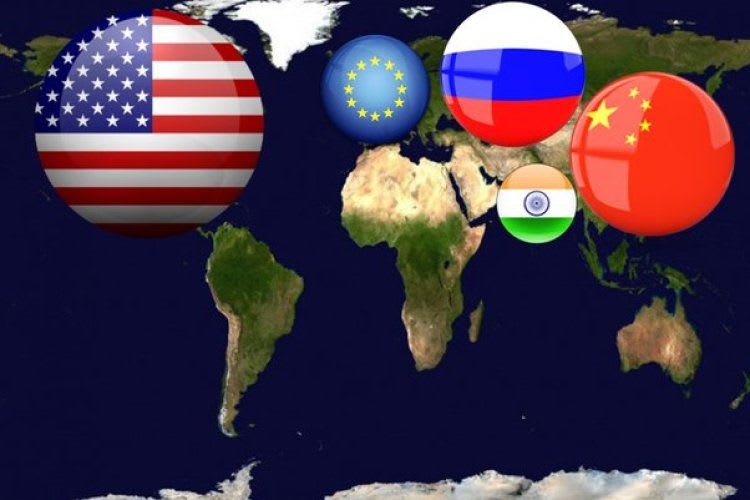
Abroad, the United States is not seeking to transform the world but to shape it in ways that keep America safe, rich, and secure. The Western Hemisphere is placed first, not last — a return to an older doctrine. The goal is a stable neighborhood that cooperates against cartels, narco-terrorism, and mass migration, while resisting hostile foreign footholds. The document introduces what it calls the “Trump Corollary to the Monroe Doctrine,” warning that ownership of ports, telecom infrastructure, or resource assets in the Americas by rival powers will be opposed. The hemisphere should become the manufacturing and supply chain engine that keeps America strategically independent from Asia.
In the Indo-Pacific, the central challenge is China — economic, military, technological, and ideological. For decades, Washington assumed opening trade would make China a “responsible stakeholder” in a rules-based order. Instead, China became richer, more assertive, and used global integration to weaken American manufacturing. The strategy states that the U.S. must rebalance trade, secure supply chains, protect intellectual property, and end strategic dependency. American allies — Japan, India, Korea, Australia — are viewed as essential partners in a coalition meant to preserve a free Indo-Pacific, deter aggression against Taiwan, and prevent any power from controlling sea lanes like the South China Sea. The region is described as the future economic center of the world, and the United States intends to compete there from strength, not nostalgia.
Europe is assessed in stark cultural terms. Its greatest threat is not Russia alone, but civilizational decline — low birthrates, mass migration, censorship, and eroding national identity. Economically, Europe has been shrinking relative to global GDP. The strategy’s goal is not to abandon Europe but to help it recover confidence, autonomy, and sovereignty. Stability in Ukraine and a negotiated end to war are framed as essential to preventing escalation and restoring strategic balance. The United States will remain engaged, but Europe must carry far more responsibility for its own defense and economic revival.
The Middle East is no longer treated as the perpetual center of American foreign policy. With U.S. energy independence and shifting regional alignments, the region is seen increasingly as a partner in technology, investment, and security rather than a theater for endless war. America’s interests remain clear: energy chokepoints must stay open, Israel’s security must be guaranteed, terror threats must be constrained, and peace agreements such as the Abraham Accords should expand. Nation-building is rejected. Instead, the United States will work with regimes as they exist, seeking stability and strategic cooperation rather than ideological remaking.
In Africa, the strategy proposes a move away from aid-based engagement toward trade and investment. The goal is to partner with capable states, develop energy and mineral resources, support conflict resolution where strategically meaningful, and avoid long military entanglements. The broader context is geopolitical competition — if America does not engage economically, China will.
How America Intends to Act
The strategy is built on a philosophical foundation described through principles rather than slogans. It favors peace through strength, but strength is defined as deterrence, industrial power, cultural confidence, and energy abundance rather than simply troop deployment. It is predisposed toward non-intervention — meaning America should not impose its system on other nations. It embraces realism — not cynicism, but a willingness to work with governments that differ from ours when interests align. It treats sovereignty as a moral good, both for the United States and for other nation-states. It rejects the global empire mindset and instead supports balance of power among sovereign nations. It prioritizes American workers and families over GDP abstractions.
The document argues that prosperity must be broadly shared, the industrial base must be rebuilt, critical supply chains must be secured, and America must never again rely on adversaries for essential inputs or technologies. Trade must be fair, reciprocal, and strategic rather than ideological. Economic tools — tariffs, financing, technology partnerships — are framed as legitimate instruments of national power. The days of America shouldering asymmetrical burdens, paying the bill for global order, and allowing allies to free-ride are declared over.
Why This Matters
This strategy is not tinkering at the edges. It represents a re-rooting of American foreign policy in sovereignty, industry, borders, and balance of power. Rather than treating democracy promotion as the centerpiece of U.S. grand strategy, it treats national cohesion, economic strength, and territorial control as prerequisites for global leadership. The goal is not to withdraw from the world but to engage it differently — selectively, strategically, and from a position of renewed internal strength.
It envisions a world of nations, not a world of transnational governance. It shifts focus from abstract global duties to concrete national interests. It demands allies carry their own weight. It prioritizes peace through power rather than peace through institutional idealism. It sees culture, family, and identity as national security pillars, not domestic policy footnotes.
Whether one agrees with it or not, this is a clear departure from the worldview that dominated Washington for three decades. It is a blueprint for a nation that intends to remain the most powerful, secure, and prosperous state in the world — not by managing everything everywhere, but by rebuilding the foundations of strength at home and using that strength abroad with purpose rather than inertia.
In historical terms, this is the pivot from global empire maintenance to sovereign national resilience. And if followed through, it may mark the most significant reorientation of American grand strategy since 1945.
We saw this shift coming long before it was written in policy language. We called out the failures of globalization when the experts laughed. We warned about outsourcing, border erosion, cartel-state infiltration, supply chain fragility, and the slow suicide of Western identity. We argued that national strength begins at home — in culture, families, industry, and sovereignty — when most of Washington was still worshiping the altar of “rules-based global order” and pretending it could last forever. Now it’s here in black and white. This isn’t just a course correction. It’s a full-circle confirmation of everything we’ve been shouting into the void for years. It’s energizing, it’s historic, and it’s the first time in a long time that American strategy reads like a nation choosing to live — not decay politely. I’ve never been more excited for what comes next.
Read The Whole 2025 National Security Strategy Below
