

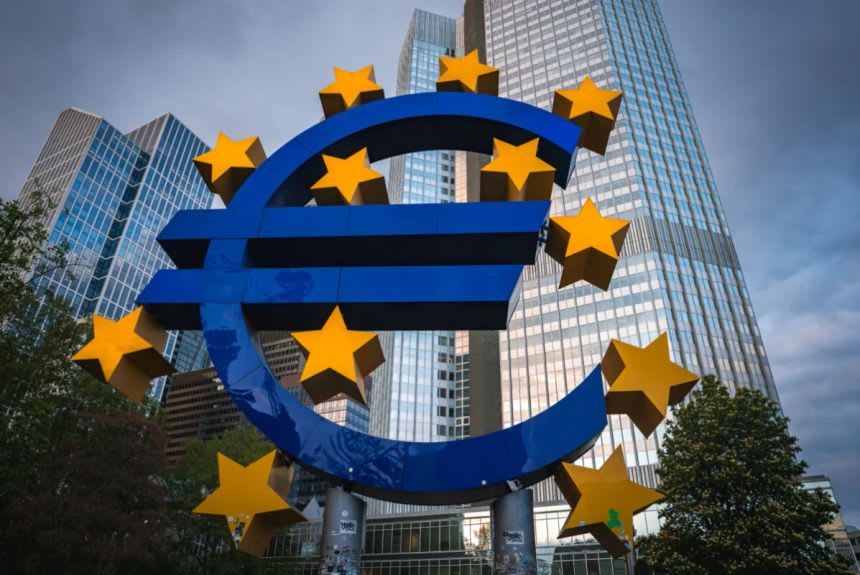
Is Europe unintentionally helping Russia win?
Donald Trump’s push for an early negotiated peace between Ukraine and Russia represents a direct existential threat to the European Union as it is currently constituted. Peace—real peace, not a frozen conflict—would have collapsed the EU’s financial, political, and strategic narrative overnight.
What is unfolding in Europe reads less like miscalculation and more like controlled demolition operation. The freezing—and now effective seizure—of Russian-linked assets at Euroclear is not simply a sanction gone too far. It is a deliberate trigger in a broader effort to collapse the European Union’s existing financial architecture and, with it, the London-centered banking cartel that has dominated global capital flows for decades.
That process accelerates the moment Donald Trump removes the United States as the EU’s financial backstop.
Trump’s decision to defund and condition U.S. support for Ukraine did not merely pressure Kyiv. More importantly, his insistence on pursuing a negotiated settlement between Ukraine and Russia threatened to end the war on terms that would devastate European interests. It forced Europe to confront a war it could not afford and a system it could no longer sustain. Without Washington underwriting the conflict, Brussels faced a stark choice: accept a negotiated peace and a financial reckoning, or prolong the war long enough to extract what value it could from the system before collapse.
Europe chose the latter.
The Russian assets frozen in 2022 were never meant to be spent. They were never supposed to survive a peace deal. They were leverage—political theater designed to signal resolve while assuming eventual American rescue. But when Trump pulled the plug, those frozen funds became the only available war chest. The moment Europe reached for them, the collapse became inevitable.
This is the point where intent matters.
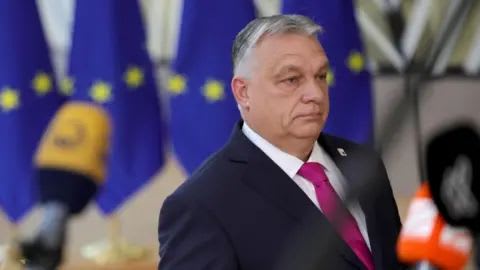
By bypassing unanimity requirements and overriding Hungary’s veto, the EU openly abandoned the legal structure that legitimized its authority. That was not a bureaucratic oversight. It was a calculated move out of desperation that exposes—and exhausts the system. Viktor Orbán’s alignment with Trump, followed closely by Italy’s assertion of sovereign control over its gold reserves, created a fault line Brussels could not bridge without force.
Rather than compromise, the EU centralized.
That choice signals something deeper: the EU leadership understands the structure cannot survive intact. The objective is no longer preservation. It is containment and extraction.
The London banking nexus—Euroclear, the City of London, and their satellite institutions—sits at the center of this implosion. These entities thrived on trust: trust in rule of law, trust in custodial neutrality, trust that capital held in Europe would remain sacrosanct. Once private and sovereign assets can be seized by political decree, that trust evaporates.
Capital flight is not a risk. It is the plan of the Trump global chess game to remove a head of the hydra.
By forcing funds out of Europe, the old system sheds liabilities it can no longer honor. Losses are socialized. Pensions, public balance sheets, and peripheral economies absorb the damage while insiders reposition. This is how financial empires end—not with collapse from below, but with evacuation from above.
Trump’s role is central to this outcome.
That role is not improvised. It is codified.
Trump’s National Security Strategy explicitly rejects the post–Cold War assumption that supranational institutions are stabilizing forces. Instead, it frames transnational governance structures as sources of instability, corruption, and perpetual conflict. The strategy emphasizes sovereign nations, bilateral diplomacy, and regional self-responsibility—particularly in Europe. In practical terms, this means the United States will no longer underwrite systems that erode sovereignty while exporting costs and instability back to the American public.
By refusing to subsidize Europe’s war and by signaling support for sovereign-national realignments—positions articulated directly in his National Security Strategy—Trump removed the illusion that the EU could continue as a protected transnational project. His posture gave cover to leaders like Orbán and Meloni to break ranks without fear of U.S. retaliation. Once Italy makes their moved, the tripod will collapse.
Germany, France, and Italy form the structural base of the EU. Remove one leg, and the system cannot stand. Trump’s actions did not cause that weakness. They exposed it.
The seizure of Russian-linked assets accelerates the endgame. It destroys the euro’s credibility as a reserve currency, discredits European financial custodianship, and signals to the world that Europe has chosen coercion over stability. That choice is irreversible.
From Moscow’s perspective, the outcome is perversely advantageous. Offshore capital once capable of destabilizing Russia has been neutralized. The West’s financial weapon has detonated inside its own house. Russia adapts. Europe fractures.
This is why the conflict increasingly resembles something other than a proxy war.
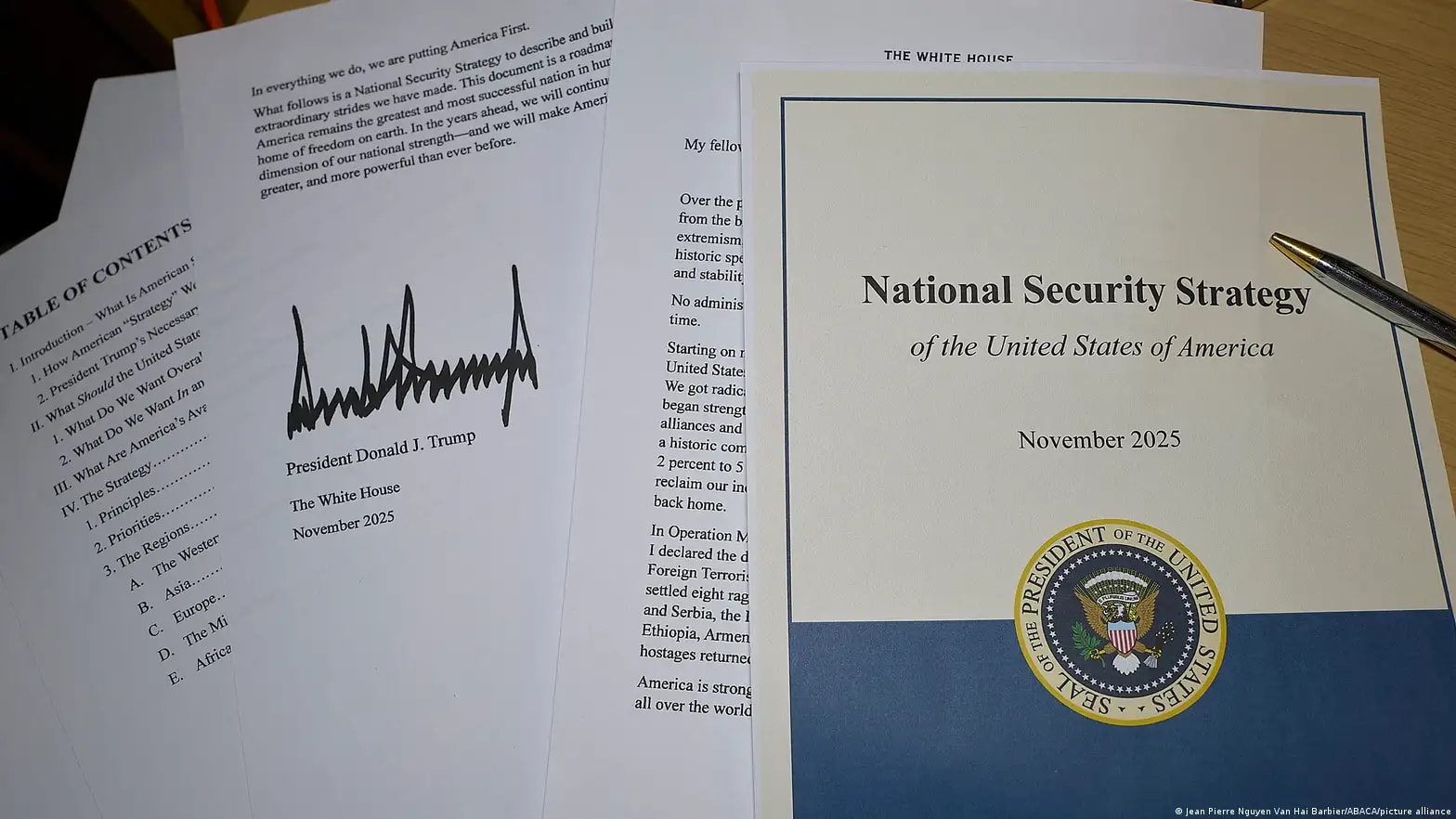
Under Trump’s National Security Strategy, Europe is expected to stand on its own feet—militarily, financially, and politically. The document explicitly calls for enabling Europe to take primary responsibility for its own defense while cultivating resistance within European nations to the EU’s current trajectory. Peace in Ukraine, under this framework, is not a concession to Russia; it is a mechanism to dismantle a system that relies on permanent crisis to justify its own existence.
It is a managed retreat from a failed transnational system.
Trump did not dismantle the European Union. He simply refused to keep paying for it. Once the money stopped, the rules stopped mattering. Once the rules stopped mattering, the end was guaranteed.
Wars follow money. Always.
And when money is used to break a system rather than save it, the collapse is not a mistake. It is the objective.
The European Union is not being weakened by Russia.
It is being liquidated by design.
