

How Energy, Finance, and Power Are Being Rewritten in Real Time
There are moments in history when change does not arrive with a declaration, a treaty, or even a war. It arrives quietly, through the failure of a system that was once assumed to be permanent. The shift becomes visible not when something new rises, but when something old no longer functions the way it was supposed to.
That is what we are witnessing now.
The signal did not come from a battlefield. It came from one of the most entrenched financial institutions in the world—Lloyd’s of London—an institution that, for centuries, has quietly governed the risk layer of global trade. When Lloyd’s hesitated, reversed course, and moved to align with Washington after attempting to suspend tanker insurance in the Persian Gulf, it revealed something profound.
The system it represented is no longer untouchable.
The Architecture of Invisible Power
To understand why this matters, you have to step outside the conventional narrative of geopolitics. Most people are taught to think in terms of nations, alliances, and military force. But the modern global order has been shaped far more by financial architecture than by armies.
At the center of that architecture is energy—specifically oil—and the systems that enable it to move across the world. These systems are not simple supply chains. They are layered networks of control built around pricing, financing, and risk management.
Energy is extracted in one part of the world, priced in another, and insured somewhere else entirely. That final layer—insurance—is the least visible and the most powerful. Because without insurance, nothing moves. Ships do not sail. Cargo does not clear. Trade does not occur.
For decades, London has dominated that layer. Through institutions like Lloyd’s, the City of London has functioned as the gatekeeper of maritime risk. It does not need to command armies or control resources directly. It only needs to decide what is insurable.
And that decision determines whether the global economy continues to function.
The Strait of Hormuz and the Illusion of Scarcity
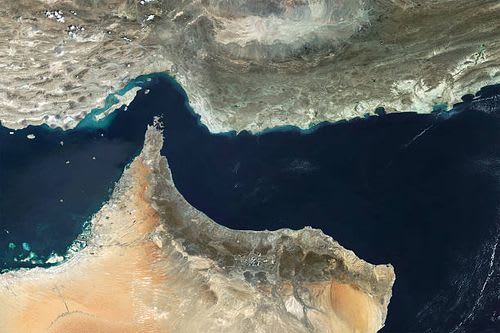
When Lloyd’s suspended war-risk insurance for tankers moving through the Strait of Hormuz, it triggered a familiar mechanism—one that has been used repeatedly over the past several decades.
The Strait of Hormuz is one of the most critical chokepoints in global energy. A significant portion of the world’s oil supply passes through it, and any threat to that passage immediately reverberates through financial markets. But the key insight is this: markets respond not just to actual disruptions, but to the possibility of disruption.
This is where the system reveals itself.
The global oil market has long included what can only be described as a built-in fear mechanism. Economists refer to it as a risk premium. When instability rises in the Middle East, prices increase—even if no oil supply has actually been lost. The threat alone is enough.
Over time, that threat has been monetized.
According to estimates associated with figures like Peter Navarro, tensions involving Iran have added persistent costs to global oil pricing. Those incremental increases, multiplied across decades, amount to trillions of dollars transferred through financial markets.
This is not simply volatility. It is structure.
A system that profits from instability does not necessarily seek to resolve it.
The Moment of Disruption
What makes the recent events different is not the crisis itself, but the response to it.
When Lloyd’s attempted to withdraw coverage, it activated the traditional lever of control. Under normal conditions, this would have forced shipping to slow or halt, triggering price spikes and market panic. The system would have behaved exactly as it had in the past.
But this time, it didn’t.
Instead, the United States intervened directly—not by negotiating with insurers, but by replacing them. Washington announced that it would provide its own political risk insurance for vessels operating in the region. In doing so, it removed the dependency on London’s insurance markets entirely.
This was not a symbolic move. It was structural.
For the first time in modern history, the United States demonstrated that the financial gatekeeping function long held by London could be bypassed. The implication was immediate and unmistakable.
If the gatekeeper can be replaced, it no longer controls the gate.
Within days, Lloyd’s reversed its position.
That reversal was not simply a business decision. It was an acknowledgment that its leverage had been neutralized.
Pre-Positioned Energy and the End of Panic
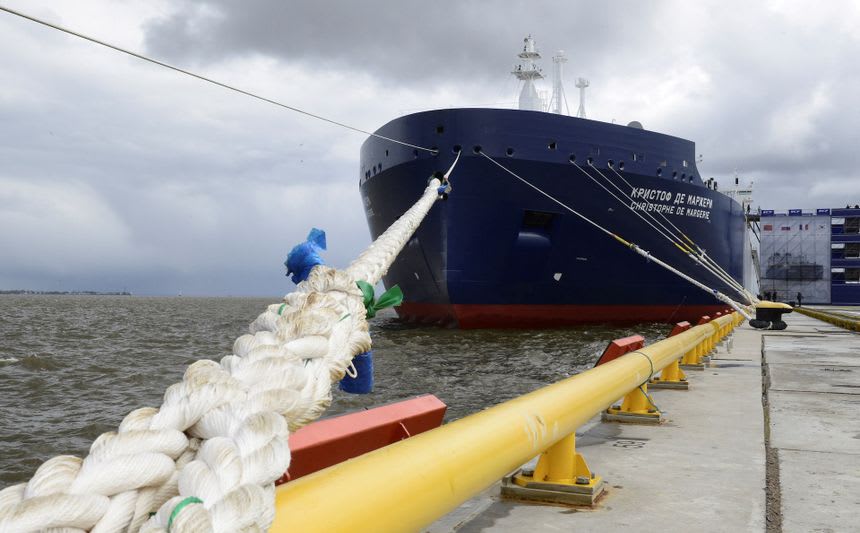
At the same time, another layer of preparation was already in motion.
Following a summit in Alaska between President Trump and Vladimir Putin, Russian energy exports began to behave in an unusual way. Oil was loaded onto tankers and held offshore without immediate buyers. These shipments functioned as floating reserves—available, but not yet deployed.
At first glance, this appeared inefficient. In reality, it was strategic.
When tensions escalated in the Persian Gulf, those reserves suddenly became critical. They represented supply that existed outside the primary chokepoint. They could be released into the market quickly, without dependence on the Strait of Hormuz.
This changes everything.
Because the power of a chokepoint does not come from its physical constraints alone. It comes from the market’s belief that it cannot be bypassed. Once that belief is broken, the chokepoint loses its leverage.
The presence of pre-positioned oil effectively neutralized the panic mechanism that has historically driven price spikes. Markets could no longer assume scarcity.
And when scarcity cannot be assumed, fear cannot be priced.
A Shift in Military Logic
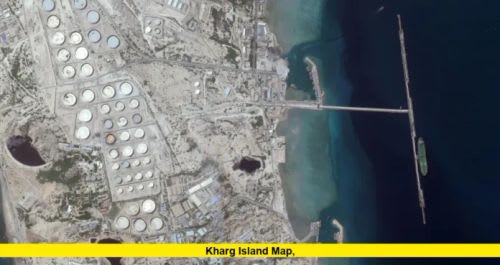
This same pattern is visible in the application of military force.
When U.S. forces struck Kharg Island, they did not target the oil infrastructure that underpins Iran’s economy. Instead, they focused on military capabilities tied to disruption—particularly those associated with the ability to threaten shipping routes.
This distinction matters.
Previous conflicts in the region often resulted in widespread destruction of economic infrastructure, creating long-term instability and dependency. This time, the approach appears more selective.
The objective is not to collapse the system, but to remove the elements that destabilize it.
In doing so, the strategy preserves the economic foundation for whatever comes next, while eliminating the mechanisms that generate continuous crisis.
The Exposure of Financial Interconnections
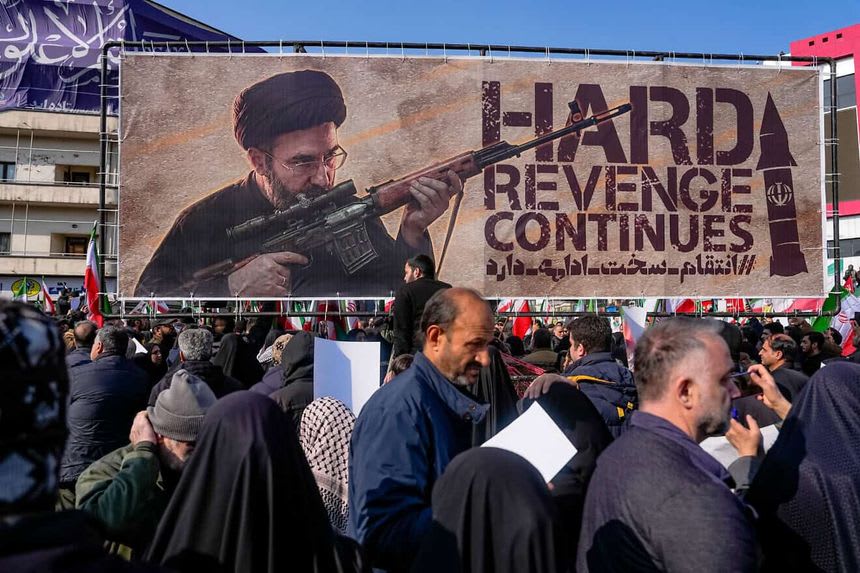
Another dimension of the old system is also coming into view.
Investigations into the financial networks surrounding Iran’s leadership have revealed connections that run through offshore jurisdictions linked to London. Wealth associated with Mojtaba Khamenei has been traced through structures embedded within the broader ecosystem of the City of London.
This is not an isolated phenomenon.
It reflects a broader reality in which geopolitical adversaries often operate within the same financial architecture. Public narratives emphasize conflict and opposition, while private capital flows through shared networks.
The system, in other words, transcends the conflicts it appears to manage.
And that system has historically benefited from the persistence of those conflicts.
The Emerging Realignment
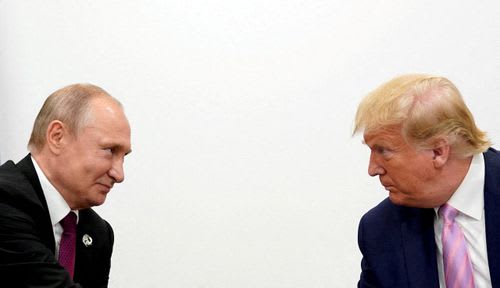
What is now unfolding is not a conventional geopolitical shift. It is a reconfiguration of the underlying system itself.
The United States is no longer operating strictly within the framework that defined the post–Cold War order. It is bypassing established financial mechanisms, coordinating energy flows across traditional adversaries, and prioritizing stability in global supply chains over adherence to legacy alliances.
Russia’s role in supplying energy to global markets, China’s dependence on stable imports, and the Gulf states’ transition toward long-term infrastructure development all point toward a new alignment.
This alignment is not ideological.
It is functional.
It is based on maintaining continuity in the global economy while reducing the ability of any single system to impose leverage through disruption.
The Reaction of the Old Guard
Perhaps the clearest indication that a shift is underway comes from those who are resisting it.
Figures associated with the previous system, such as John Bolton, have criticized the departure from established processes. They argue that traditional frameworks are being bypassed, that decision-making appears unconventional, and that long-standing norms are being disregarded.
But those norms were part of the system that produced decades of unresolved conflict.
They were not designed to eliminate instability.
They were designed to manage it.
And in managing it, they sustained the financial structures that depended on it.
What is happening now challenges that entire model.
The System Begins to Crack
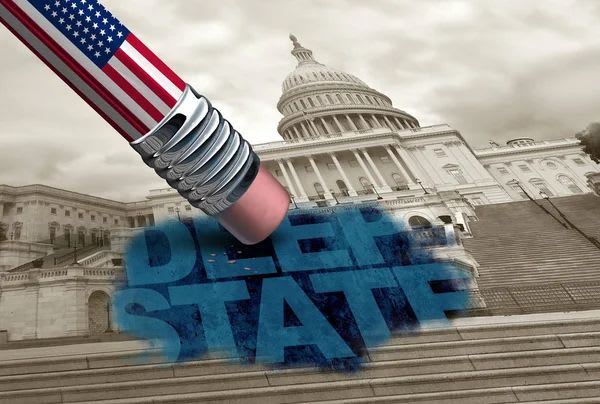
When viewed in isolation, each of these developments can be explained as a response to immediate circumstances. But when taken together, they form a coherent pattern.
-
Insurance control has been bypassed.
-
Energy supply has been pre-positioned.
-
Military action has been selectively applied.
-
Financial networks have been exposed.
-
Geopolitical alignments have been reconfigured.
Each element points toward the same conclusion.
The mechanisms that once allowed a small set of institutions to exert disproportionate influence over global energy and finance are being systematically weakened.
The Meaning of the Blink
What unfolded with Lloyd’s of London was not simply a reversal of a market decision, nor was it a temporary adjustment to geopolitical risk. It was a moment of recognition—one that revealed a deeper shift taking place beneath the surface of global finance and power.
For generations, institutions like Lloyd’s operated with an implicit understanding: they were indispensable. Their role in underwriting risk for global trade was not just important—it was foundational. The system depended on them, and because of that dependency, they possessed a quiet but immense authority. They did not need to assert power openly; it was embedded in the structure itself. If they moved, markets moved. If they withdrew, trade stalled. That was the nature of their influence.
What changed in this moment was not the system itself, but the perception of its permanence.
When the United States stepped in and replaced the insurance function—effectively creating an alternative pathway for global shipping to continue—it demonstrated something that had never been fully tested at scale before: the system could be bypassed. Not theoretically, but operationally. Not in concept, but in execution.
That realization alters everything.
Because power at this level is not sustained purely by capability—it is sustained by belief. The belief that there is no alternative. The belief that certain institutions are too embedded to be challenged. The belief that the system, as constructed, is the only system that can exist.
Once that belief is broken, even partially, the nature of power begins to change.
It does not disappear overnight. Institutions do not collapse simply because they are challenged. But they begin to lose something far more important than control—they lose inevitability.
-
Their authority is no longer assumed; it must be asserted.
-
Their decisions are no longer final; they can be countered.
-
Their role is no longer exclusive; it becomes competitive.
In that environment, coherence starts to erode. The system no longer operates as a unified structure with clearly defined hierarchies. Instead, it becomes fragmented, adaptive, and increasingly uncertain. Influence becomes something that must be negotiated rather than exercised. Outcomes become contingent rather than predetermined.
This is the stage where systems do not yet fall, but they begin to transform.
And transformation at this level is rarely smooth.
The Quiet Fall of a System.

The decline of entrenched systems rarely follows the dramatic arcs that history tends to remember. There is no single moment where everything changes at once, no definitive collapse that signals the end. Instead, the process unfolds gradually, almost imperceptibly at first, through a series of small but consequential shifts.
It begins with moments like this—moments where something long assumed to be stable reveals an unexpected vulnerability. Moments where an institution that once dictated outcomes is forced to respond instead of act. Moments where the mechanisms of control hesitate, even briefly.
These moments do not dismantle the system outright. What they do is introduce doubt into its foundation.
That doubt spreads slowly.
It changes how participants within the system behave. It alters expectations. It opens space for alternatives to emerge and be taken seriously. Over time, what was once a rigid and centralized structure becomes more fluid, more contested, and less predictable.
This is how systems lose their grip—not through sudden collapse, but through the gradual erosion of their authority.
What we are witnessing now fits that pattern.
The financial architecture that has shaped global energy flows, influenced geopolitical conflicts, and directed economic outcomes for decades is still in place. Its institutions still operate. Its networks still function. But the assumption that it is unchallengeable has been weakened.
And that is the critical shift.
Because once a system is no longer seen as absolute, it is no longer fully in control.
It must adapt, compete, and respond in ways it never had to before.
That is where the old guard finds itself today—not eliminated, not replaced, but exposed to a reality it has not faced in a very long time.
-
A reality where its power is no longer guaranteed.
-
A reality where the future is no longer dictated solely by its structures.
-
A reality where, for the first time in generations, the system itself is being questioned.
And when that happens—when the foundation of a system begins to shift beneath it—it marks the beginning of something far more significant than a single event.
It marks the quiet, unfolding transition from one order to another.
