

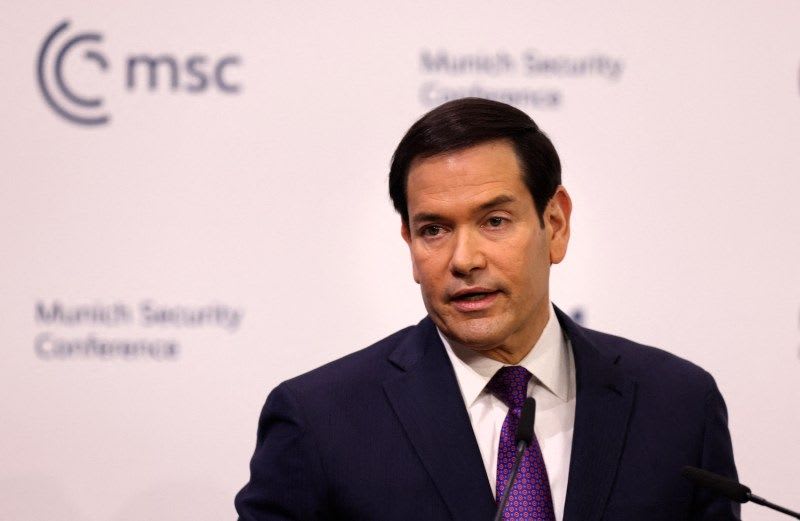
At the 2026 Munich Security Conference, European leaders openly acknowledged what many have felt for years: the post-1945 global order is breaking down. The language was stark, the tone defensive, and the subtext unmistakable. The old rules no longer hold.
But there’s a harder question hiding beneath the speeches and press releases.
Who actually has the power to shape what replaces it?
When Europe declares the “rules-based order” dead, that statement only matters if Europe still has the leverage to enforce rules. Right now, it doesn’t.
Europe’s combined GDP looks impressive on paper, but strategic autonomy tells a different story. Defense spending lagged for decades. Energy dependency was exposed in real time. Manufacturing hollowed out. Growth slowed under regulatory weight. Demographics tilted negative. Politics fragmented. For years, European leadership leaned into soft power, legal frameworks, and moral authority. That approach works during stability cycles. It collapses during power cycles.
And we are no longer in a stability cycle.
We are in a power cycle.
Hedge fund billionaire Ray Dalio frames this moment as part of a historical pattern: rising and falling empires, debt accumulation, internal disorder, and external conflict. He isn’t wrong about the cycle itself. History does rhyme.
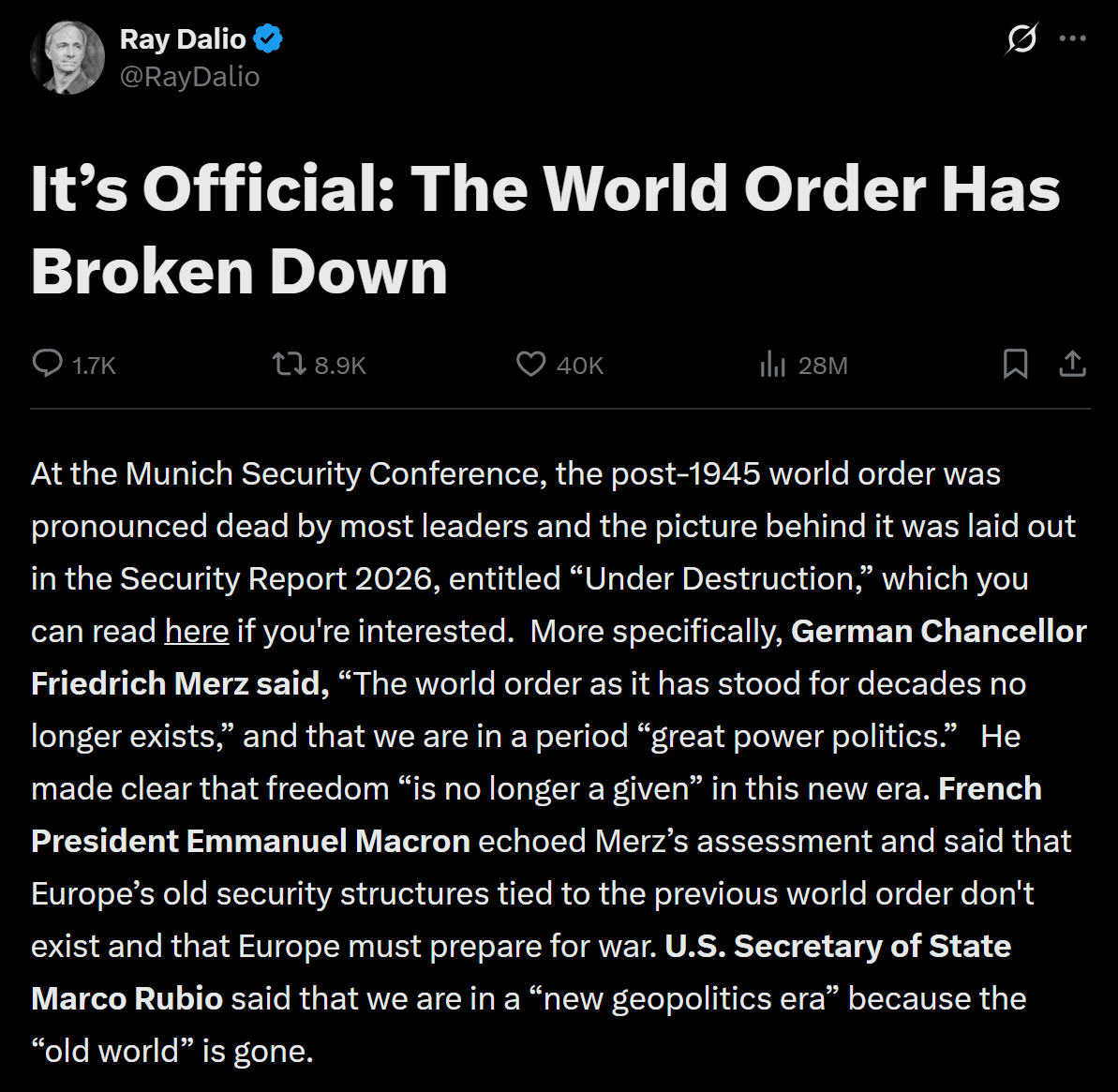
But where his framing falls short is agency.
This isn’t simply an automatic decline of “the West.” It’s a restructuring. A dismantling of an exhausted global managerial system and the construction of something far more transactional and power-based in its place. Europe is not leading that reconstruction.
Whether people support him or not, Donald Trump represents a break from the old consensus. The message coming from Trump, increasingly echoed by figures like Marco Rubio, is straightforward: alliances are not charity, defense guarantees are not blank checks, trade must benefit America first, borders matter, energy matters, and industrial capacity matters.
While Brussels spent the last decade prioritizing social engineering, climate absolutism without industrial insulation, and immigration policies that strained internal cohesion, Washington pivoted toward energy expansion, supply chain reshoring, semiconductor sovereignty, strategic mineral acquisition, and AI dominance. That didn’t happen accidentally. That happened because someone finally started thinking in terms of competitive positioning instead of ideological maintenance.
The new order forming is not unipolar. It is not liberal-institutional. It is not global-managerial.
It is multipolar.
Multipolar systems produce blocs, spheres of influence, resource corridors, naval routes, semiconductor choke points, and capital controls. In these environments, moral signaling does not equal power. Energy production equals power. Industrial output equals power. Technological dominance equals power. Military projection equals power.
Europe lacks several of these pillars at scale.
The United States still possesses all of them—if it chooses to exercise them.
This is where the conversation becomes existential, because the real battlefield is not just territory or trade. It is intelligence itself.
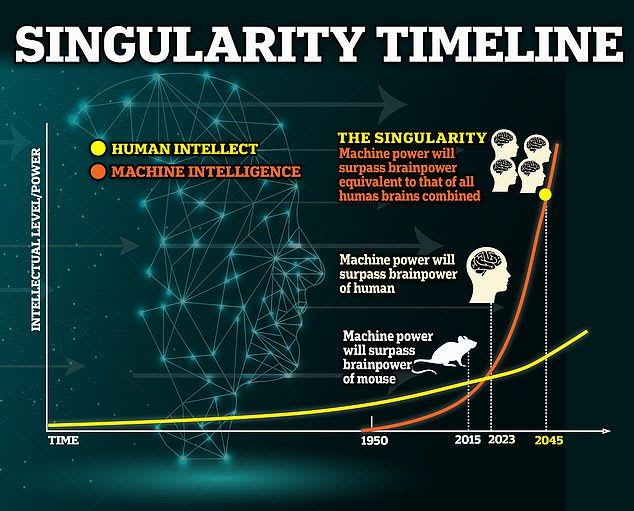
The first power bloc to achieve decisive AI superiority, and eventually ASI-level systems, will gain more than an economic edge. It will accelerate scientific discovery, optimize military strategy, dominate cyberspace, shape narratives, allocate capital with unprecedented precision, and predict supply chain behavior before competitors even see disruptions coming. Intelligence becomes the ultimate multiplier.
The next world hyper-power will not be crowned by tanks alone.
It will be crowned by compute.
And compute runs on energy, chips, infrastructure, and capital.
The AI race is not theoretical. It is geopolitical infrastructure in motion. Europe is not leading it.
In stable decades, institutions matter most. In transitional decades, power matters most. Europe can host conferences declaring the old world dead, but unless it regains industrial strength, military capacity, energy independence, and demographic vitality, it will not define what replaces it. It will adapt to what others define.
That may sound harsh.
History is harsh during transition phases.
Here is the core thesis: the collapse of the post-1945 order is not random chaos. It is the unwinding of a globalist managerial architecture that reached its functional limits. The new system forming is built around strategic blocs competing for resource security, energy throughput, industrial sovereignty, technological supremacy, and AI dominance.
Viewed through that lens, Trump’s approach is not isolationism.
It is consolidation.
It is preparing the United States to dominate the next cycle rather than fade within the last one.
Europe can eulogize the old world order. Ray Dalio can chart its historical decline. But the question that matters now is not who explains the collapse.
It is who commands the reconstruction.
In a world where power projection returns, where leverage replaces rules, and where intelligence becomes the ultimate advantage, the next hyper-power will not be the one that writes the best white paper.
It will be the one that controls the energy, the chips, the capital—and the AI.
And that race is already underway.
