

Modern geopolitical conflict no longer unfolds exclusively through tanks, aircraft, and missile systems. The battlefield has expanded dramatically over the last two decades, and today every major conflict operates simultaneously across three interconnected domains. The first remains the traditional physical battlefield, where militaries engage directly through force projection and strategic operations. The second is the economic battlefield, where sanctions, financial pressure, trade disruption, and resource control become weapons used to weaken adversaries without firing a shot. The third, and increasingly decisive domain, is the information battlefield, where perception itself becomes the terrain upon which strategic advantage is fought.
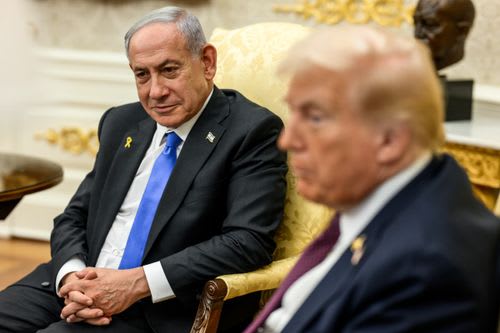
The viral narrative claiming that Israeli Prime Minister Benjamin Netanyahu has been assassinated must be understood within this third domain. At first glance it appears to be nothing more than a rumor circulating through social media networks. However, when examined through the lens of modern information warfare, the story becomes something much more significant. It functions as a case study in how narratives are manufactured, amplified, and psychologically embedded within digital populations during periods of geopolitical tension.
Understanding why such a narrative spreads so rapidly reveals far more than simply how misinformation works. It exposes a deeper vulnerability within modern societies: the human psychological architecture that makes populations susceptible to manipulation when information ecosystems become saturated with emotionally charged claims.
The Three Psychological Actors Behind Viral Disinformation
Whenever a geopolitical narrative suddenly erupts across social media platforms, the individuals responsible for spreading it are rarely acting as a single unified group. Instead, the propagation of disinformation typically emerges from three distinct categories of participants whose motivations, awareness levels, and intentions differ dramatically.
Understanding these categories helps explain why certain narratives appear to spread organically even when their origins are highly strategic.
Influence Operators
The first category consists of what can be described as intentional influence operators. These actors are not merely sharing rumors or speculating about events; they are deliberately injecting narratives into the digital information environment with strategic objectives in mind.
Influence operators may take many forms. In some cases they operate as state-sponsored propaganda teams embedded within intelligence agencies or military psychological warfare divisions. In other instances they function through loosely affiliated activist networks that coordinate narrative campaigns around specific geopolitical events. Increasingly, these operations are also carried out through automated bot networks and algorithmic amplification systems capable of rapidly spreading a story across multiple platforms within hours.
The goal of these actors is rarely as simple as convincing every observer that a specific claim is true. The more sophisticated objective is far more subtle. By introducing dramatic or destabilizing narratives into the information ecosystem, they aim to inject uncertainty into the public discourse. Confusion becomes a strategic tool. If multiple conflicting explanations circulate simultaneously, people eventually reach a psychological state where distinguishing truth from fiction becomes exhausting.
This phenomenon is often referred to by information warfare analysts as information flooding. Rather than promoting a single coherent story, operators release numerous overlapping narratives, each competing for attention. As the information environment becomes saturated with contradictory claims, a large portion of the audience begins to adopt a fatalistic perspective: the belief that no one actually knows what is happening and that objective truth may not even exist within the media ecosystem.
Once this psychological threshold is reached, the battlefield shifts dramatically. The objective is no longer to persuade audiences of a particular fact. Instead, the strategic objective becomes narrative dominance, where influence actors attempt to control which interpretation of reality gains the most emotional traction.
Agitators

The second group responsible for amplifying viral narratives consists of ideological agitators. Unlike influence operators, agitators are not necessarily part of a coordinated campaign. Their role emerges organically from deeply held political or ideological beliefs.
Individuals in this category often approach geopolitical events through a rigid interpretive framework shaped by their worldview. When a narrative appears that aligns with their existing beliefs about international power dynamics, government corruption, or geopolitical conspiracies, they become enthusiastic amplifiers of that narrative regardless of its factual basis.
In many cases, agitators view viral stories not as claims that must be verified but as tools that can be deployed against ideological opponents. The accuracy of the information becomes secondary to the narrative’s usefulness. If the story damages an adversary or reinforces an existing belief system, spreading it becomes justified within their internal logic.
This dynamic frequently leads agitators to radicalize the original narrative. What begins as a simple claim that a leader has been killed quickly evolves into elaborate speculation involving secret assassinations, intelligence agency cover-ups, or hidden geopolitical plots. Additional layers of accusation and interpretation are added until the narrative expands far beyond its original form.
The result is a powerful amplification effect. Agitators function as the force multiplier that allows disinformation to propagate organically through social networks, transforming a targeted information injection into what appears to be a spontaneous grassroots movement.
The Unaware Participants

The third and largest category of participants consists of individuals who unknowingly become part of the information operation. These participants are not motivated by strategic objectives or ideological agendas. Instead, they represent the ordinary social media user navigating an environment where information moves at extraordinary speed and verification often occurs after emotional reaction.
These individuals tend to trust viral posts more quickly than traditional journalistic processes would recommend. They frequently interpret the popularity of a claim as evidence of credibility, assuming that if thousands of people are discussing a story it must contain at least some element of truth. Within highly polarized information environments, they may also confuse speculation or opinion with factual reporting.
Because social media platforms reward rapid engagement, these users often share content before taking time to evaluate its reliability. Ironically, many believe they are participating in a process of uncovering hidden truths or exposing suppressed information. In reality, they are acting as distribution nodes within the very information operation they believe they are resisting.
This dynamic explains why disinformation campaigns often succeed without requiring a large number of coordinated actors. Once the narrative reaches a critical level of emotional engagement, the unaware population effectively takes over the distribution process.
Why the “Netanyahu Assassination” Narrative Is Psychologically Powerful
The effectiveness of disinformation campaigns depends heavily on their ability to activate emotional triggers within the audience. Stories that provoke strong emotional reactions are significantly more likely to be shared across social networks, particularly when they involve dramatic geopolitical developments.
The rumor that Benjamin Netanyahu has been assassinated contains several psychological characteristics that make it particularly potent within the current geopolitical climate.
First and most obvious is the element of shock. The sudden death of a sitting world leader instantly captures global attention. Humans are psychologically wired to prioritize dramatic or threatening information, a trait rooted in evolutionary survival mechanisms. The more shocking the claim, the faster it spreads through digital networks.
Second, the narrative directly engages with existing fears surrounding Middle Eastern conflict escalation. The region already occupies a precarious geopolitical position, with numerous overlapping tensions involving Israel, Iran, regional militias, and global superpower alliances. Introducing the claim that Iran has assassinated Israel’s prime minister immediately triggers mental scenarios involving military retaliation, regional war, and potentially catastrophic escalation.
When audiences encounter information that appears to signal imminent danger or instability, the brain processes it as urgent. Urgency dramatically increases the likelihood that individuals will share the information quickly without conducting careful verification.
A third psychological element involves the concept of political martyrdom. Leaders who are killed during periods of conflict often become powerful symbolic figures within national narratives. If a leader such as Netanyahu were assassinated by a hostile foreign power, the resulting emotional response within Israel could include widespread national unity, heightened security mobilization, and intense public pressure for retaliation.
Because such an event could dramatically alter geopolitical dynamics, the mere suggestion of it carries destabilizing potential.
The Illogical Nature of the Cover-Up Theory

Perhaps the most revealing aspect of the narrative is the claim that Israel is secretly hiding the death of its prime minister while continuing to present him as alive in public appearances.
From a geopolitical standpoint, this claim collapses under even minimal scrutiny.
The assassination of a sitting prime minister would immediately trigger a cascade of institutional responses. Government succession mechanisms would activate to ensure continuity of leadership. International diplomatic channels would engage as world leaders expressed condolences or reassessed regional security implications. Intelligence agencies across multiple countries would rapidly analyze the event, and media organizations would mobilize extensive investigative coverage.
In democratic societies, leadership transitions are governed by constitutional procedures that cannot simply be ignored or concealed. The logistical complexity of maintaining a global deception involving government officials, military leadership, intelligence agencies, foreign diplomats, and journalists would make such a cover-up virtually impossible.
Historically, the assassination of national leaders tends to produce the opposite of secrecy. These events often become rallying points that strengthen national cohesion while justifying strong retaliatory measures against perceived enemies.
The suggestion that a government would suppress such a politically powerful event contradicts both historical precedent and practical political incentives.
The “Everything Is AI” Defense Mechanism
A particularly fascinating element of contemporary disinformation culture is the growing tendency to dismiss contradictory evidence by labeling it as artificial intelligence manipulation.
When videos appear showing Netanyahu speaking publicly or participating in government activities, some proponents of the assassination narrative respond by claiming that the footage is an AI-generated deepfake. According to this logic, any visual or audio evidence that contradicts the rumor must itself be part of an elaborate deception.
This strategy creates what psychologists refer to as an unfalsifiable narrative. In an unfalsifiable belief system, no amount of evidence can disprove the claim because every piece of contradictory information is interpreted as further proof of the conspiracy.
Ironically, the rapid advancement of artificial intelligence technology has made this tactic easier to deploy.
Understanding the Battlefield of Perception
The viral narrative claiming that Benjamin Netanyahu has been assassinated provides a revealing case study in how modern information warfare functions. What appears on the surface to be a rumor circulating through social media is, in reality, a demonstration of how rapidly narratives can be engineered, amplified, and weaponized in the digital age. The velocity with which such claims spread illustrates a broader transformation in global conflict: control of perception has become nearly as consequential as control of territory.
In earlier eras, propaganda required centralized institutions such as state radio, newspapers, or television networks to shape public understanding. Today, the architecture of social media allows narratives to move through decentralized networks at extraordinary speed, often reaching millions of people before any verification process can occur. Within this environment, emotional shock and geopolitical tension act as accelerants. A claim involving the sudden death of a world leader touches on some of the most sensitive fault lines in international politics, particularly when the alleged perpetrator is a long-standing adversary such as Iran. The narrative therefore activates both fear and speculation simultaneously, ensuring that the information spreads rapidly even among those who may doubt its authenticity.
Equally important is the ecosystem that sustains such narratives once they begin circulating. The interaction between deliberate influence operators, ideological agitators, and well-meaning but uninformed participants creates a self-reinforcing feedback loop. Coordinated actors inject the claim into the information environment, agitators amplify it for ideological reasons, and ordinary users unknowingly distribute it further because the claim appears to be gaining momentum. The result is a cascading effect in which the narrative begins to feel credible simply because of its ubiquity.
The logical inconsistencies within the rumor itself often become secondary to the psychological power of the story. The idea that the assassination of a sitting Israeli prime minister could be secretly concealed from the global stage contradicts the most basic realities of modern geopolitics. A leader’s death would trigger a series of unavoidable institutional responses: constitutional succession procedures, international diplomatic engagement, military readiness adjustments, and extensive media coverage from governments and intelligence agencies around the world. These realities make the notion of a prolonged cover-up implausible. Yet in the environment of digital information warfare, plausibility is not always the primary driver of belief. Emotional narratives frequently outperform logical ones because they are easier to share and more compelling to audiences already primed for conflict.
