

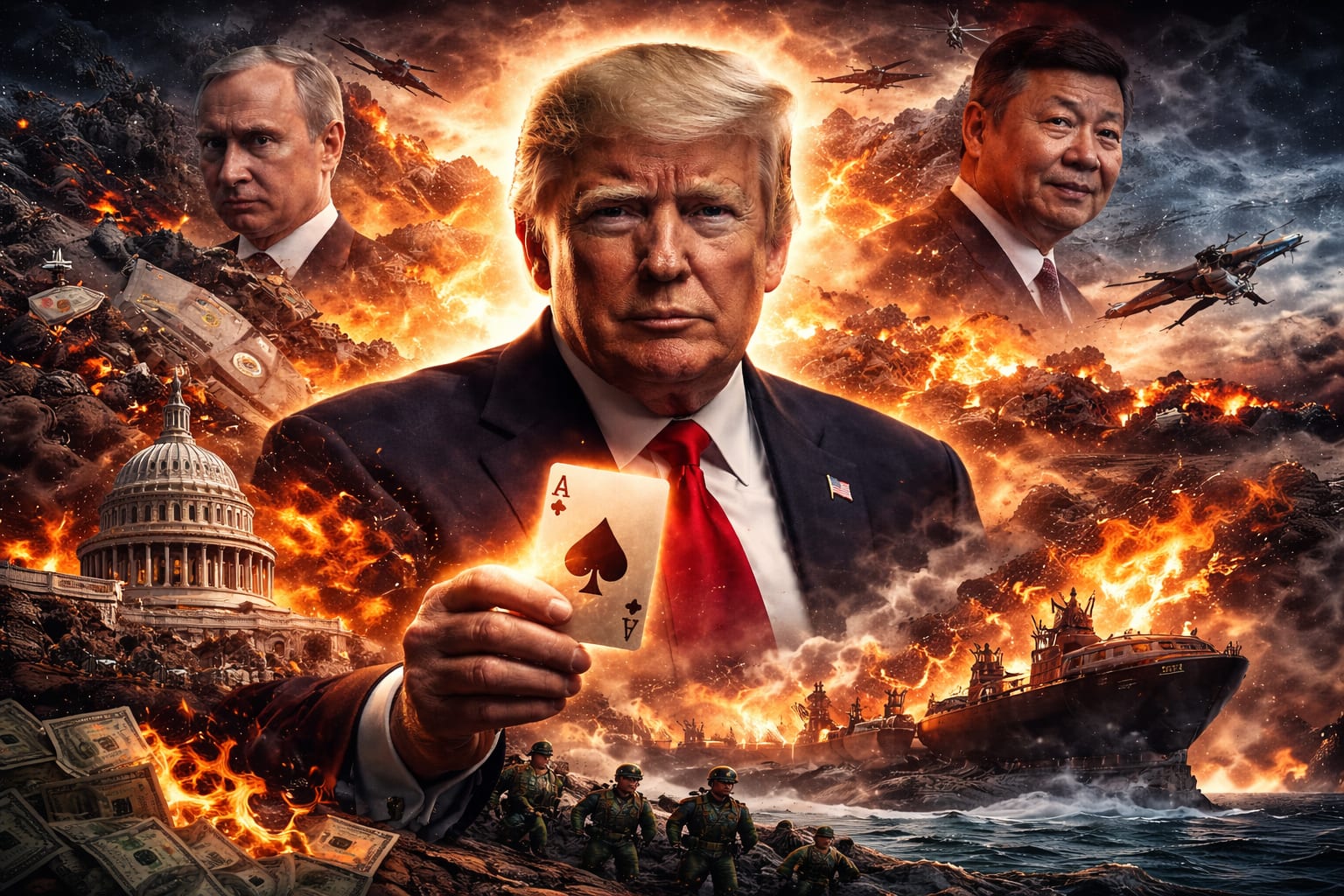
Something bigger is happening right now than most people realize.
On the surface, the headlines look disconnected. Arizona subpoenas. Georgia ballot scrutiny. Intelligence reviews. Senate fights over election legislation. Trump talking with Putin. Iran destabilizing. China maneuvering for energy control. The media treats each one like a separate event, isolated inside its own narrow box.
That is the mistake.
What we are watching is not a string of unrelated stories. We are watching multiple fronts of the same war begin to converge. Domestic accountability, election integrity, global power realignment, energy control, and the unraveling of the old political order are all moving at once. That is why this moment feels different. It is not just another news cycle. It is a sequencing event.
This is why the phrase “Trump card incoming” matters.
Not because it sounds clever. Not because it makes for a good show title. But because it describes a strategy. Donald Trump does not appear to be operating on the normal political calendar. He is not moving like a man trapped by donor schedules, media narratives, primary deadlines, or the conventional pace of Washington. He is moving like someone timing pressure points.
That is the real story.
Trump Is Not Moving on Their Timeline
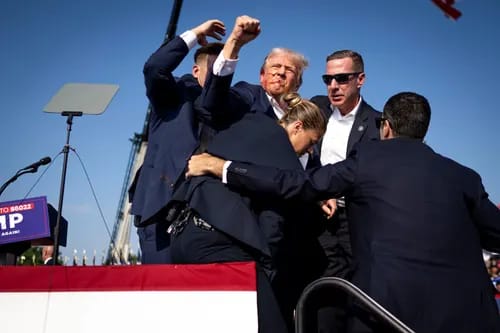
One of the biggest mistakes people make when analyzing Trump is assuming he is playing the same game everyone else is playing. They think in terms of election cycles, poll numbers, media response windows, and short-term legislative fights. Trump has never operated that way. He thinks in leverage, timing, narrative traps, and momentum shifts.
That is why so many people miss what is happening until after it is already in motion.
What we are seeing now is a coordinated pressure campaign building on multiple fronts at once. The legal and intelligence side is starting to move on election issues. The foreign policy side is shifting around Iran, Russia, and China. The public narrative side is beginning to crack as stories that were once dismissed are returning with more formal weight behind them. The Senate is being forced into uncomfortable territory. The old guard is being boxed in from multiple directions.
That is not random. That is strategy.
The reason timing matters so much is because each development reinforces the next. If evidence of foreign interference starts coming out while lawmakers are debating election security, that changes the political calculus. If grand jury activity begins to validate long-standing allegations of fraud or unlawful election administration, that changes the media landscape. If, at the same time, international events expose the fragility of the globalist order and the necessity of new alliances and new leverage, then the system begins to lose its ability to contain the story.
That is how the board gets rearranged.
The Real Domestic Battle: Election Integrity and the Exposure of a Protected System
For years, the establishment acted as though the 2020 election was a closed subject. Ask questions and you were a threat. Point out anomalies and you were mocked. Suggest foreign influence, compromised systems, or coordinated manipulation and you were treated like someone stepping outside the boundaries of acceptable discourse.
But now that wall appears to be weakening.
The most explosive aspect of this moment is not just that election issues are returning. It is that they may be returning through formal channels: intelligence reviews, subpoenas, forensic examinations, declassification, and grand jury pathways. That changes everything.
Because once the discussion moves from internet debate into legal process, the old dismissals stop working.
If state law was not followed in the administration of federal elections, that matters. If ballot chains were compromised, that matters. If voter identity systems were penetrated by foreign actors, that matters. If counties or states administered elections outside lawful procedure, that matters. If officials knowingly allowed it, covered it up, or benefited from it, that matters even more.
This is where the story becomes dangerous for the establishment.
The issue is no longer merely whether there were irregularities. The issue becomes whether the political system has been protected by a network of institutions that relied on opacity, narrative enforcement, and selective law enforcement to keep the truth buried. Once you ask that question, you are no longer debating one election. You are examining whether the public has been governed inside a managed illusion.
That is the deeper fear.
Because if it turns out that some people holding office did not lawfully win, the consequences are not limited to embarrassment. The legitimacy of the current power structure comes into question. The committees, the votes, the appointments, the legislation, the investigations, the obstruction, all of it suddenly looks different. What once looked like politics begins to look like a criminal enterprise hiding behind constitutional theater.
And if that happens, the panic inside the old guard will be unlike anything we have seen.
Why the Senate Fight Matters So Much
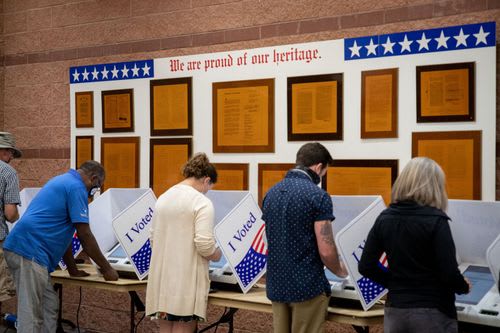
This is also why resistance to election security legislation matters.
A lot of politicians frame these bills as unnecessary, politically risky, or procedurally divisive. But that excuse becomes much harder to sustain if evidence begins emerging that election systems were penetrated, voter identities were manipulated, or state procedures were unlawfully bypassed. At that point, opposition stops looking principled. It starts looking self-protective.
That may be the key to understanding what is happening.
Some lawmakers may not fear election reform because they disagree with it. They may fear it because genuine election transparency would expose how fragile or fraudulent the current structure really is. If stronger enforcement, auditability, citizenship verification, chain-of-custody enforcement, and system integrity rules threaten the architecture that protected them, then they have every incentive to delay, obstruct, and posture.
That would explain a lot.
It would explain why some people seem far more afraid of investigation than of foreign interference. It would explain why media institutions worked so hard to shut down legitimate questions before they could mature into formal inquiry. It would explain why the same people who claim democracy is sacred seem allergic to verifying how it functions.
And it would explain why this next phase could be so destructive to the establishment.
Because once the public sees that the resistance to election reform may have been rooted in self-preservation, trust collapses fast.
The Circle Closes: From Russia Collusion to Election Interference
One of the most important dimensions of this story is continuity.
The people and institutions surrounding the current moment are not appearing out of nowhere. They come from the same ecosystem that gave us Russia collusion, intelligence manipulations, surveillance abuse, lawfare, media coordination, and the use of federal power against political enemies. That is what makes this different from a single scandal. It suggests pattern.
If the same intelligence and law enforcement universe that pushed false or distorted narratives in one era is now being tied back to election interference, prosecutorial abuse, or suppression of evidence in another, then the public is not looking at isolated misconduct. It is looking at an operating system.
That is a much bigger problem.
Because once people begin to understand that Crossfire Hurricane, FISA abuse, election manipulation claims, media coordination, and the protection of compromised officials may all be linked through the same institutional machinery, then the myth of neutral governance dies. What replaces it is the image of a regime that weaponized bureaucracy, intelligence, and information control to shape political outcomes.
That is not democracy. That is managed rule.
And if that becomes widely understood, the old guard loses more than credibility. It loses moral cover.
Iran Is Not Just a War Story. It Is an Energy Story.
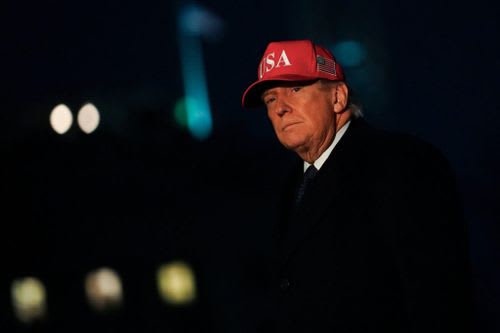
At the same time all of this is playing out domestically, the international board is shifting with equal intensity.
Most people still analyze the Iran conflict the way cable news taught them to. Missiles, retaliation, escalation, military posture, regional instability. Those things matter, but they are not the deepest layer. The deepest layer is energy.
This is about the control of corridors, routes, chokepoints, and leverage.
The Strait of Hormuz is not just a geographic feature. It is a pressure valve on the world economy. Whoever can secure it, influence it, threaten it, or negotiate around it holds a major piece of the board. When conflict erupts around Iran, it is not merely about ideology or old rivalries. It is about who controls the channels through which the modern world is powered.
That is why this conflict has to be understood through economics as much as military action.
Trump’s apparent objective is not endless war for the sake of war. It is leverage. It is control of the energy corridor. It is blocking adversarial consolidation. It is preventing China from gaining deeper strategic advantage in another critical zone. It is shaping the post-conflict order before someone else does.
That is how real power thinks.
The old neocon model was occupation, destruction, chaos, and expensive nation-building with no end state. But this moment looks different. It looks like a constrained campaign designed to force a reordering, not a forever war designed to consume another generation.
That distinction matters enormously.
China’s Real Game: Infrastructure, Ownership, and Dependency
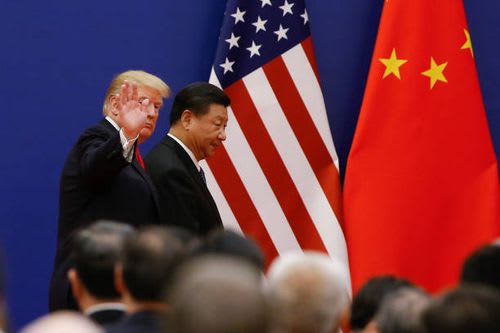
To understand why Iran matters so much, you have to understand China’s long game.
China does not always move through dramatic military spectacle. It often moves through infrastructure, ports, financing, extraction deals, construction, logistics, and dependency. It enters unstable or transitional regions not just with rhetoric, but with contracts. It builds roads, buys access, finances systems, and locks in influence.
That is how power is acquired without always firing a shot.
When the United States exits or hesitates, China steps in. It does this through resource deals, reconstruction packages, and strategic ownership. It turns instability into leverage. It transforms access into influence. It converts infrastructure into geopolitical advantage.
That is why any major realignment in Iran matters to Beijing.
If Iran falls more deeply into a Chinese orbit economically, then the energy map of Eurasia changes. If China expands its ability to influence critical oil and transit infrastructure across the region, then the future balance between East and West changes. If the United States fails to shape the aftermath of conflict, China will try to buy it.
Trump appears to understand this.
That is why the Iran issue cannot be separated from the larger fight over the multipolar world. This is not just about Tehran. It is about the architecture of future global control. It is about whether the next phase belongs to sovereign civilizational blocs negotiating strength-to-strength, or whether it belongs to a Chinese-led model of strategic dependency built one corridor at a time.
That is the actual contest.
Russia Is the Swing Variable the Media Still Doesn’t Understand
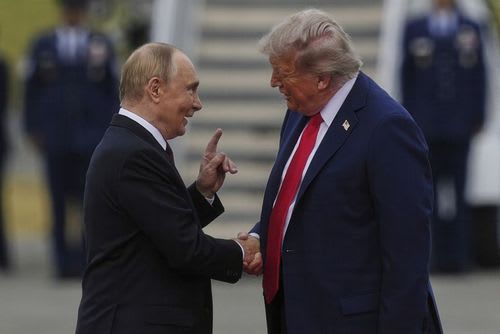
The corporate press spent years conditioning the public to see Russia only through a single emotional lens. But in strategic terms, Russia is not just an adversary. It is a variable. And that variable may be the most important one on the global board.
If Russia remains welded to China, the world becomes more dangerous. If Russia moves into a practical alignment with the United States on key issues, China’s strategic options narrow dramatically. That is the simple truth.
Russia has resources, geography, military depth, and leverage. It also understands China in ways the West often refuses to. Russia knows what it means to share a border with China. It knows the risks of long-term imbalance. It knows that China’s ambitions do not end at partnership. They end at dominance.
Trump knows this too.
That is why the backchannel dynamic matters so much. Public hostility and private coordination can exist at the same time. Diplomatic theater often masks strategic alignment. What the public sees on the surface is not always the real story underneath. If Trump and Putin have been communicating more deeply than the public understands, and if that communication is part of a broader attempt to reposition Russia away from a fully integrated Chinese bloc, then that is one of the most consequential strategic plays of this era.
Because if Russia tilts toward the United States, even partially, China has to recalculate everything.
And that means the world avoids the most dangerous configuration of all.
The Point Is Not World War III. The Point Is Preventing It.
One of the great deceptions of the current media environment is the claim that every show of force by Trump automatically leads toward catastrophe. But the opposite argument deserves serious attention: what if the point of these moves is to prevent the larger war waiting down the road?
That is the strategic case.
You do not stop tomorrow’s war by pretending it is not forming. You stop it by shaping the board before the pieces lock into place. You stop it by cutting off energy leverage, by preventing hostile alignment, by forcing negotiations, by breaking command structures, by isolating escalation risks, and by securing chokepoints before they become weapons.
That is not recklessness. That is preemption at the level of grand strategy.
The same logic applies domestically. You do not stop institutional corruption by politely waiting for the people benefiting from it to fix themselves. You expose it. You box it in. You force legal and public confrontation. You collapse the protective narratives that keep it alive.
That is what this moment appears to be about on both fronts.
Not chaos for its own sake. Not destruction without purpose. But controlled pressure applied in ways that prevent a much worse future from solidifying.
The Old Guard Is Not Just Being Challenged. It Is Being Cornered.
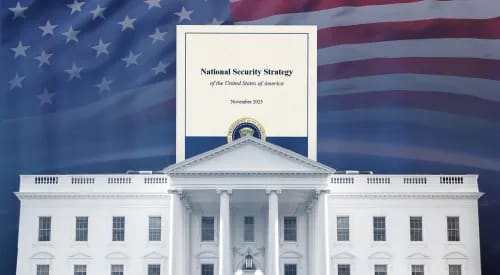
If you step back and look at the board as a whole, the pattern becomes unmistakable.
The establishment is under pressure from the election side because formal review may be returning to issues it declared forbidden. It is under pressure from the legal side because old intelligence abuses may be re-entering public scrutiny. It is under pressure from the geopolitical side because the globalist model is breaking apart under the weight of resource competition, civilizational realignment, and the failure of liberal managerial rule. It is under pressure from the economic side because energy, sovereignty, supply chains, and industrial resilience are reasserting themselves over abstract ideology.
That is a very dangerous place for a regime to be.
Because once an old order is attacked on legitimacy, competence, transparency, and strategic vision all at once, it loses the ability to defend itself cleanly. Every defense becomes an admission. Every delay becomes suspicious. Every media narrative becomes weaker. Every contradiction becomes more visible.
That is when systems begin to fail.
And that may be what we are witnessing now: not a temporary panic, but the early-stage controlled collapse of an order that has survived for decades through institutional immunity and information management.
The Next Few Weeks Matter
If this analysis is correct, then the next phase will not be calm.
It will be full of document drops, legal stories, contradictory reporting, media distortion, panic narratives, desperate framing, and sudden shifts in public attention. The establishment will try to fragment the story and separate the lanes. That is how it survives. It will insist Iran is one issue, election integrity is another, intelligence abuse is another, Senate infighting is another. It will do everything possible to keep the public from seeing the pattern.
Because the pattern is what threatens it most.
If enough of the public recognizes that these stories are part of a larger struggle over sovereignty, legitimacy, energy control, and the future political order, then the old methods of containment stop working. Once people see the board, they stop being manipulated by the pieces.
That is why this moment matters so much.
The Trump Card
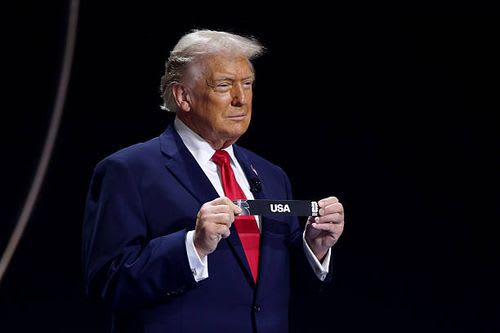
The “Trump card” is not just one indictment, one document release, one ceasefire, one speech, or one media moment. It is the convergence itself. It is the timing of multiple revelations and multiple leverage plays landing in a way that weakens every major pillar of the old guard at once.
That is the card.
It is the election issue returning with more weight behind it than before. It is the intelligence state being forced back into the spotlight. It is the global realignment exposing the failure of the old foreign policy order. It is the energy map becoming the true map of power again. It is China being boxed, Russia being repositioned, Iran being contained, and domestic corruption being pulled toward legal daylight.
In other words, it is not just about winning an argument.
It is about rearranging the board.
And if that is truly what is happening, then this is not just another political season. This is the beginning of a historical transition, one in which the old guard is no longer setting the tempo, no longer controlling the narrative, and no longer guaranteed survival.
That is why this moment feels electric.
Because people can sense it.
Something is coming into alignment. Something long hidden is beginning to surface. And if the sequence continues, the next phase will not merely be political. It will be transformative.
The Trump card, if it is being played, is not about the next headline.
It is about the next era.
